Getting Personal: A Virtual Panel Discussion on Computers, Gender, and Culture
Online Event Presented by 2nd Story
522 W Short St, Lexington, Kentucky 40507
2:00pm - 3:15pm EST
THIS PROGRAM IS VIRTUAL
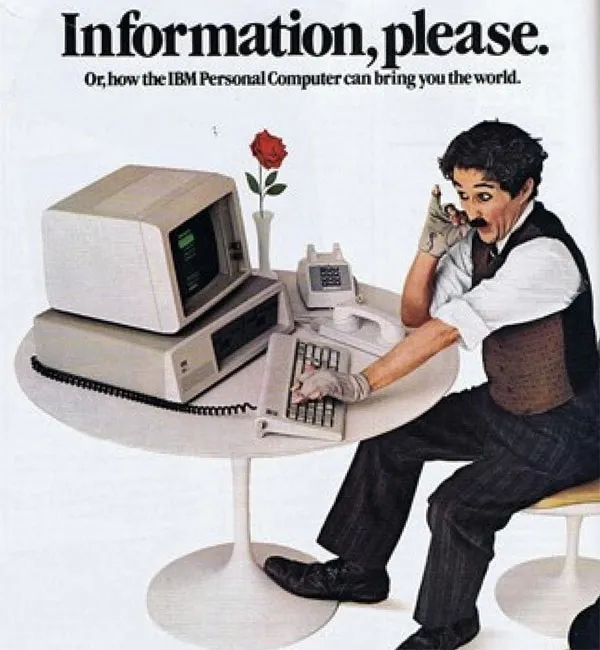
To mark the closing of Diskette//Rosette at 2nd Story, artist Camila Galaz is joined by Lori Emerson, Laine Nooney, Claire L. Evans, and Natasha Chuk for a virtual conversation expanding on the exhibition’s research into the cultural history of personal computing.
Bringing together perspectives from media archaeology, tech history, and visual culture, the discussion will explore how personal computers were marketed and imagined, and how ideas of gender, intimacy, and technological progress were used to shape the relationship between people and computers. Drawing on the research and archival materials that informed the exhibition, including Galaz’s residency at the Media Archaeology Lab, the panel will consider how these histories continue to resonate in our relationships with technology today.
This program is generously funded by The Andy Warhol Foundation for the Visual Arts
+++
PANELISTS:
Natasha Chuk is media theorist, researcher, curator, and writer who studies media objects as systems of language, creativity, and persuasive power, and how they shape/reshape visuality, geographies, publics, and ways of being. She teaches courses in the areas of film, photography, video game studies, new media art, and media theory at the School of Visual Arts and Parsons. Her recent books, published by Intellect, include Photo Obscura: The Photographic in Post-Photography (2025) and Vanishing Points: Articulations of Death, Fragmentation, and the Unexperienced Experience of Created Objects (2015). Her writing and criticism have also appeared in Millennium Film Journal, Dissect Journal, First Person Scholar, Interactive, Journal of Pervasive Media (formerly Metaverse Creativity Journal), IMPULSE Magazine, and others.
Lori Emerson is a professor and Associate Chair for Graduate Studies in the Media Studies department at the University of Colorado at Boulder. She is also the founding director of the Media Archaeology Lab, a hands-on lab dedicated to obsolete but still functioning technologies spanning from the late nineteenth century to the early twenty-first century. She writes about media poetics as well as the history of computing, media archaeology, media theory and digital humanities. Her most recent book, titled Other Networks: A Radical Technology Sourcebook (Anthology Editions, 2025), is a history of telecommunications networks that existed before or outside of the Internet.
Claire L. Evans is a writer and musician exploring biology, technology, and culture. She is the co-founder of VICE’s imprint for speculative fiction, Terraform, and co-editor, with Brian Merchant, of the accompanying anthology Terraform: Watch Worlds Burn (MCD Books, 2022). Her publication Broad Band: The Untold Story of the Women Who Made the Internet (Random House, 2018), explores the history of women in computing and was named one of the Top 10 Best Nonfiction Tech Books of All Time in 2023. Her writing has appeared in MIT Technology Review, Quanta, WIRED, The Verge, Broadcast, The Guardian, the Los Angeles Review of Books, Document Journal, Eye on Design, The Believer, and Aeon, among others.
Camila Galaz is a multimedia and video artist based in New York. Her work explores how personal identity is informed by histories of technology and cultural media, often including the use of archives, found footage, and reconsiderations of cultural touchstones. Her projects have engaged with institutions such as the Media Archaeology Lab, New Museum, Nieuwe Instituut, MoMI, MoMA PS1, BRIC, San José Museum of Art, National Communications Museum, National Gallery of Victoria, MIT, and Rhizome.
Laine Nooney is an Associate Professor of Media Industries at New York University who specializes in historical, cultural, and economic analysis of the video game and computer industries. Their first book, The Apple II Age: How the Computer Became Personal, was published in 2023 by the University of Chicago Press. Their research has been featured in The Atlantic, The New Yorker, Motherboard, and NPR, as well as academic journals such as Game Studies, The American Journal of Play, and Journal of Visual Culture. Nooney also co-founded ROMchip: A Journal of Game Histories, an open access, hybrid-audience, peer-reviewed journal dedicated to fostering the historical study of games.